Knowledge Center Expert Tips & Education What are the Signs of Emerald Ash Borer Infection in Colorado’s Trees? January 24, 2025 • 4 min read Expert Tips & Education
Emerald Ash Borer (EAB) is an invasive pest threatening ash trees across the United States, with Colorado being no exception. As a tree care enthusiast or a worried homeowner, knowing how to spot the signs of this damaging pest is vital. In this blog post, we will cover the symptoms associated with Emerald Ash Borer infection. Being aware can help you take timely action to protect your trees.
Overview of Emerald Ash Borer
The Emerald Ash Borer is a small, metallic green beetle native to Asia. Its larvae create tunnels under the bark of ash trees, disrupting essential functions like nutrient and water transport. This process leads to the tree’s decline and, ultimately, death. Although EAB is not always easy to spot, recognizing its symptoms can significantly improve the chances of saving your trees.
Thinning of Canopy
One of the first visible signs of Emerald Ash Borer infection is thinning of the canopy. When these beetles infest ash trees, they impair the transport of nutrients and water, resulting in fewer leaves and a sparse appearance.
For example, a healthy ash tree might typically have a full canopy with dense foliage. However, infected trees may develop branches that are weak and covered with smaller leaves. According to recent studies, more than 50% of infested trees show significant canopy thinning.
This symptom can also be misleading, as factors like drought or other diseases may cause similar issues. If your ash tree shows thinning along with other signs of EAB, it’s crucial to investigate further.
Splitting Bark
Another important symptom of Emerald Ash Borer infection is splitting or peeling bark. Infected trees may develop vertical cracks that can expose the inner wood.
This damage results from larval tunneling beneath the bark, which creates pressure that the bark cannot withstand. You should look for signs of flaking or lifting bark. This damage can lead to open wounds, offering entry points for other pathogens and insects, which can further harm your tree’s health.
Distinctive D-Shaped Exit Holes
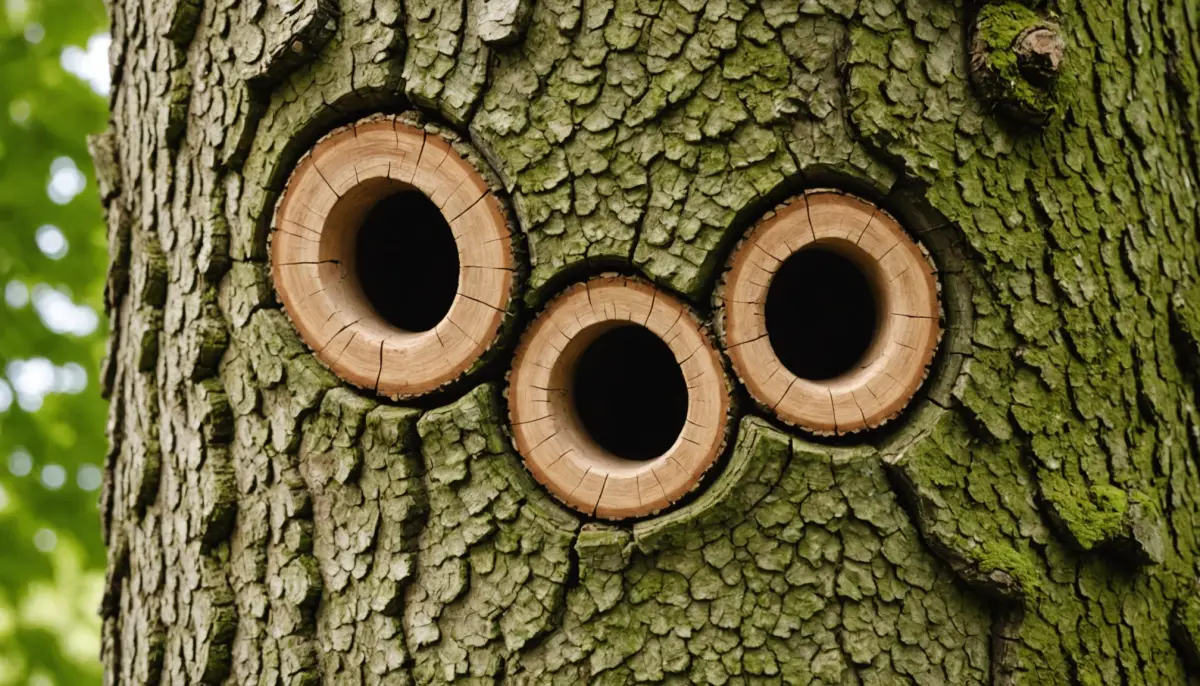
D-shaped exit holes are one of the clearest signs of Emerald Ash Borer infestation. Adult beetles typically create these holes in the bark when they emerge.
These holes are about 1/8 inch in diameter and are distinct in shape, resembling the letter “D” when viewed from the side. If you notice these holes, it indicates that the tree has likely been infested for some time. A recent survey found that nearly 70% of infested trees had visible D-shaped holes, making them an easy target during inspections.
Make sure to conduct thorough inspections of your ash trees, particularly if they are already showing other symptoms.
Galleries Beneath the Bark
When inspecting your trees, take a close look at the wood itself. Emerald Ash Borer larvae create winding S-shaped galleries just beneath the bark as they feed. You may see these if you carefully remove a section of bark.
These galleries typically vary in width and can lead to structural instability in the tree, making it more susceptible to breaking during storms or high winds. A report indicated that over 80% of infested trees revealed evidence of these galleries, marking a serious risk to your landscape.
If you find any such damage, it is a clear sign of EAB infestation, and professional help may be necessary.
Fast Dieback
Finally, rapid dieback is a crucial sign of Emerald Ash Borer infection. If leaves and branches die unexpectedly and seem to fall quickly, your ash tree might be suffering severe damage from the pest.
Fast dieback occurs when the tree loses its ability to transport essential nutrients. In severe cases, trees showing signs of dieback can become lifeless within just one or two growing seasons. According to recent data, about 60% of infested trees exhibit this alarming symptom.
If you notice fast dieback along with other symptoms previously mentioned, it is time to seek an evaluation from an arborist or tree care professional.
Final Thoughts
Emerald Ash Borer infection presents a serious threat to ash trees in Colorado. By being attentive and recognizing the symptoms—thinning canopy, splitting bark, distinctive D-shaped exit holes, galleries beneath the bark, and fast dieback—you can take proactive measures to protect your trees.
If you suspect EAB infestation in your ash trees, contact a certified arborist for professional evaluation and possible treatment options. Acting quickly can make a significant difference in saving these valuable trees and safeguarding the local ecosystem.
Stay informed and proactive to ensure the health of your ash trees and the beauty they contribute to your landscape!
If you spot an Emerald Ash Borer infection, reach out to us right away for treatment options.
970-880-0132
Forrest Bullard Forrest formed Bullard Tree and Garden in 2015 after working for big, corporate tree companies. Back to Knowledge Center GET PROFESSIONAL TREE CARE AND PLANT HEALTH Knowledge Center
Get professional advice about tree and plant health services for your property, provided by certified experts.
View all Commercial & HOA Solutions 5 min read Importance of Tree Inspections: What you need to know in Colorado Regular tree inspections are crucial for Broomfield and Arvada residents who want to maintain the beauty and safety of their properties. Read more Expert Tips & Education 2 min read Why Your Fruit Tree Isn’t Thriving (Hint: It’s Pruning) When it comes to growing healthy fruit trees, the secret isn’t just in the watering or the soil. Read more Landscape Enhancement 2 min read Transform Your Curb Appeal with Expert Flower Bed Service If your flower beds are overgrown, patchy, or just plain uninspiring, they could be doing your home a major disservice. Read more WORRY-FREE TREE AND PLANT CARE Proudly Serving Residential and Commercial Properties in Colorado
We service Boulder County and surrounding communities including Broomfield, Boulder, Lafayette, Longmont, Louisville, Superior and more. If you don’t see your area listed please contact us.
Erie Jamestown Lafayette Longmont Louisville Lyons Superior Nederland Arvada Broomfield Boulder Westminster Altona Berthod Niwot Gunbarrel Gooding Morey Firestone Fredrick Dacono Loveland